Comeback Kings: Why Aussie Underdogs Keep Breaking Bookies' Hearts (And How You Can Profit)
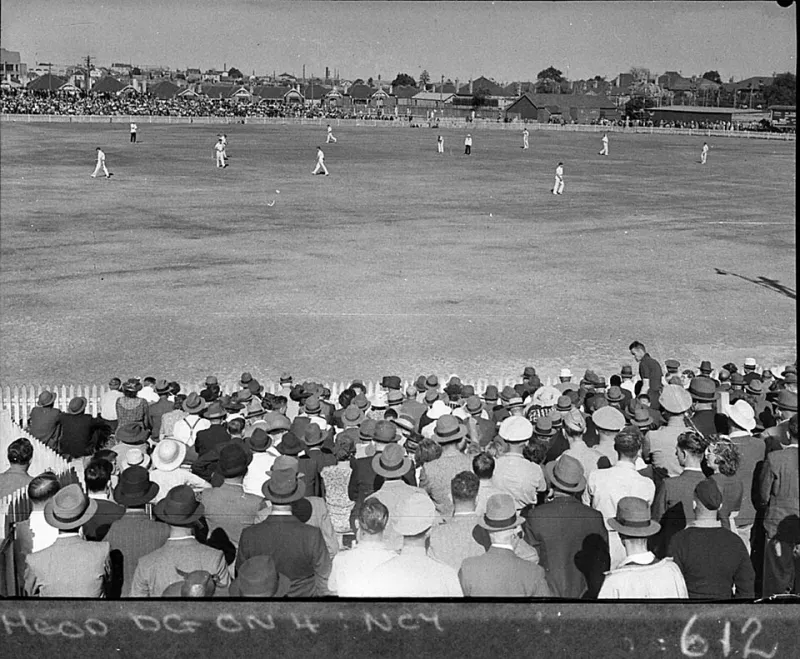
Photo: Sam Hood, Public domain, via Wikimedia Commons
There's a moment every Aussie sports fan recognises. The scoreboard looks hopeless. The commentators are already writing the eulogy. And then — somehow, inexplicably — the team that had no business being in the contest drags itself back into it, and suddenly the whole stadium is alive again.
It happens in the NRL. It happens in the AFL. It happens on a flat pitch in Brisbane when a tail-ender decides today's the day he becomes a hero. And every single time it happens, the bookmakers get caught with their pants down.
That's not an accident. It's a structural flaw in how odds are built — and if you know where to look, it's one of the more reliable edges a sharp bettor can find in Australian sport.
Why Bookies Struggle to Price 'The Moment'
Here's the thing about modern sports betting markets: they're built on data. Massive, crunching, historical datasets that spit out probabilities based on what's happened before. Possession stats, scoring rates, weather conditions, recent form — it all gets fed into the model and out comes a number.
What doesn't get fed into the model — at least not cleanly — is momentum. Or crowd energy. Or the specific psychological weight of a team that's been written off and suddenly has nothing to lose.
Bookmakers are genuinely good at pricing expected outcomes in controlled conditions. They're less good at pricing the chaos that Australian sport seems to generate on a semi-regular basis. The live markets adjust, sure, but they often adjust too slowly or too conservatively when a genuine shift is happening on the field.
And in Australian sport specifically, that shift happens more often than the models account for.
The NRL's Last-Ten-Minutes Problem
If you've watched enough NRL, you already know that a 12-point deficit with ten minutes to go is not a death sentence. It should be — statistically, teams in that position lose the vast majority of the time. But the NRL has a long, storied history of absolutely wild finishes that make a mockery of late-game odds.
Think about how in-play markets behave in those moments. A team goes down by two converted tries with eight minutes on the clock and suddenly you're seeing the trailing side at $6, $8, sometimes longer. The market is pricing a legitimate statistical improbability — but it's also completely ignoring the fact that NRL defence collapses under pressure in ways that rugby league models don't fully capture.
When a team scores once late, the defending side's defensive structure often fractures. Fatigue sets in. Panic sets in. The team that was "safe" three minutes ago is now scrambling, and the team that was dead and buried is running at them with everything they've got.
The bookies know this happens. But because it's hard to quantify when it's about to happen, the in-play odds often don't move quickly enough to reflect the shift in actual game dynamics.
AFL's Last-Quarter Rollercoaster
The AFL presents a slightly different version of the same problem. In footy, the last quarter is genuinely a different competition. Teams that have been grinding through three quarters of hard, contested footy can suddenly open up and kick five goals in twelve minutes if the momentum swings their way.
Bookmakers price AFL matches based heavily on the three-quarter time scoreline and what that historically predicts. And those predictions are reasonably accurate — most of the time. But the AFL has a higher variance in last-quarter scoring than almost any other major sport, and that variance is not evenly distributed.
Teams playing at home, teams with a particular run-on forward line, teams whose opposition has a key player carrying a knock — these factors can amplify last-quarter swings dramatically. And the market, anchored to the three-quarter time score, often doesn't account for them properly.
When an underdog is down by three or four goals at the last change and you're seeing them at $5 or $6, it's worth asking: does this team have a forward line that can run riot? Are they playing at home? Is the favourite's key defender clearly not at 100%? Because if the answer to those questions is yes, that $5 or $6 is doing a lot less work than it looks like.
Cricket and the Collapse Nobody Priced
Cricket is where the bookie blind spot gets almost comical. Test cricket, in particular, has a tendency to produce sessions that completely detach from any reasonable probability model.
A side is cruising at 3/220 chasing 280. The market has them at $1.30. And then — a wicket, another wicket, a horrible shot under pressure, a run out, and suddenly you're watching a collapse that nobody saw coming except everyone who's watched enough Australian cricket to know that collapses are basically a national tradition.
The issue is that cricket models are built on run rates and wickets in hand, which are genuinely useful inputs. But they don't weight the psychological pressure of a run chase, the specific vulnerability of a middle order that hasn't faced tough conditions all series, or the way a single electric over from a fast bowler can completely change what a batting lineup believes about itself.
That psychological fragility — and the corresponding resilience in the team doing the hunting — is where the market consistently misprices things. And in Australian domestic cricket, where the conditions are brutal and the crowds are loud and the bowlers are aggressive, those psychological factors matter enormously.
Finding the Edge Without Getting Burned
None of this means you should be blindly backing every underdog in the final stages of an Aussie sports contest. The market is right most of the time — that's why it's the market. What you're looking for is the specific set of conditions where the model's weaknesses are most exposed.
A few things worth watching for:
Momentum that predates the scoreline. If the trailing team has been dominating possession or territory for the last fifteen minutes but hasn't converted it into points yet, the scoreline is lying to you. The market is looking at the scoreline. You're looking at the actual game.
Fatigue asymmetry. Has the favourite been playing high-intensity, physical footy all game while the underdog has had more rest phases? Late-game physical condition matters more than the models typically account for.
Crowd and venue factors. Australian sport is genuinely affected by crowd energy in ways that are hard to quantify. A fired-up home crowd at Suncorp Stadium or the MCG during a finals game is not a neutral factor.
The nothing-to-lose mentality. Teams that are already written off play differently. They take risks they wouldn't take in a balanced contest. Sometimes those risks don't pay off — but sometimes they produce the kind of football or cricket that completely unravels a favourite.
The Bottom Line
Bookmakers are sophisticated operations with serious analytical firepower behind them. But they're building models on historical data, and historical data can't fully capture the specific brand of chaos that Australian sport generates with impressive regularity.
The 'Aussie grit factor' — the comeback, the never-say-die finish, the last-quarter blitz — isn't just a narrative. It's a genuine statistical anomaly in domestic competition, and it shows up in the pricing gaps that sharp bettors have been quietly exploiting for years.
Next time you're watching a game and the market has written off the trailing side, don't just accept the number. Look at what's actually happening on the field. Sometimes the bookie's blind spot is sitting right there in front of you, flashing like a neon sign.
At BoomBet AU, we're all about finding the value that others miss. And in Australian sport, the value has a habit of hiding in the moments that look most hopeless.