Catch the Wave Before It Breaks: How Live Odds Monitoring Gives Aussie Punters a Real Edge
There's a reason professional surfers don't just study wave patterns from the beach and then walk away. The ocean moves. The conditions shift. And the best surfers are the ones watching in real time, ready to paddle when the right swell rolls in.
Betting markets work the same way.
For years, the standard advice handed down to Aussie punters was simple: do your research, find your value, place your bet. And look, that framework isn't wrong — it's just incomplete. Because in 2024, the gap between static research and live market intelligence is where the real money is hiding.
Why Static Research Has a Shelf Life
Let's say you spend your Tuesday night doing deep homework on a Thursday night NRL clash. You crunch the injury data, check the weather forecast, review recent form, and land on a price you reckon represents solid value. You write it down. You feel good about it.
Then Thursday rolls around, a key forward gets scratched from training, sharp money floods the market, and the line you liked has shifted three points in the wrong direction before you've even had your morning coffee.
Your research wasn't wrong. It just aged out.
This is the core limitation of static analysis — it captures a snapshot of the market at a single point in time, but betting markets are living, breathing things that reprice constantly. Team news, weather changes, public betting patterns, sharp syndicate activity — all of it moves the needle, often within hours of kick-off.
The punters who consistently find value aren't necessarily smarter than you. They're faster. And they're watching.
What Live Odds Monitoring Actually Looks Like
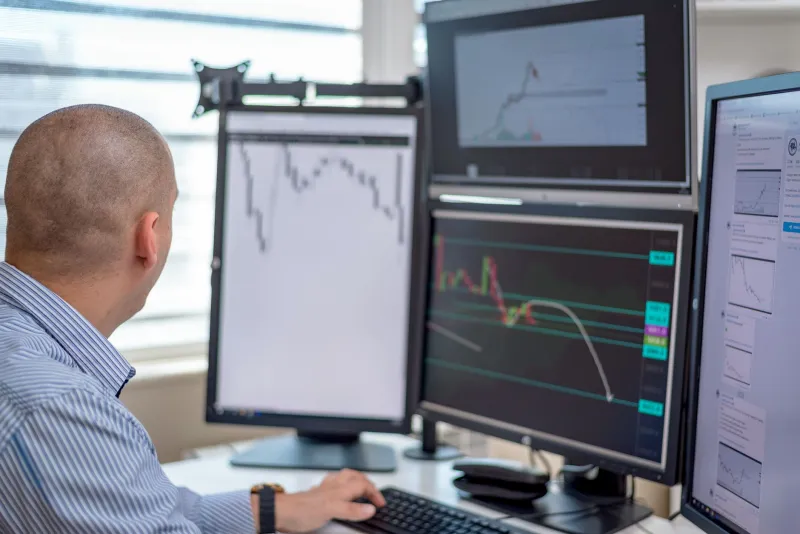
Real-time odds tracking doesn't have to mean sitting glued to six screens like you're running a trading desk in the Sydney CBD. For most recreational Aussie bettors, it's far more practical than that.
At its most basic level, live monitoring means checking odds across multiple platforms close to event time — not just at the moment you first research a bet. Odds comparison tools are your starting point here. Sites that aggregate prices from multiple bookmakers in real time let you see not just where the best current price sits, but how prices are moving across the board.
When a price drops sharply at one bookie but hasn't yet adjusted elsewhere, that's a window. It might only stay open for minutes — sometimes less — but it's a genuine value opportunity created by market inefficiency.
Beyond comparison tools, dedicated odds movement trackers give you a historical view of how a line has shifted over time. If a team opened at +5.5 and has been creeping toward +3.5 over 48 hours, that tells a story. Maybe it's public money backing the favourite. Maybe it's sharp action on something the public hasn't noticed yet. Either way, that movement is information — and static research won't show it to you.
The Psychology Trap: Speed Without Discipline Is Just Gambling Faster
Here's the part most articles won't tell you, and it's the part that matters most.
Real-time monitoring is a tool. Like any tool, it can be used well or used badly. And the biggest risk for punters who start watching markets closely is that the speed of it all starts to feel like urgency — like every movement is a signal demanding immediate action.
It isn't.
The psychological pull of live data is real. You see a line shift, your brain interprets it as a countdown clock, and suddenly you're placing bets you haven't properly evaluated because you're afraid the window will close. That's not sharp betting — that's reactive gambling dressed up in the language of strategy.
Professional punters who use live monitoring successfully do so within a pre-set framework. They've already done the foundational research. They already know what price represents value on a given market. The live monitoring isn't telling them what to bet — it's telling them when the price has reached the threshold they were already looking for.
Think of it like this: the research sets the target, and the live tracking is what tells you when the target is in range. Without the research, you're just shooting at anything that moves.
Practical Ways to Start Tracking Without Overcomplicating It
If you're new to real-time monitoring, here's a sensible way to build the habit without drowning in data.
Pick two or three markets and go deep. Don't try to track NRL, AFL, horse racing, and cricket simultaneously when you're starting out. Choose the sports you know best and focus your monitoring there. Depth beats breadth every time.
Set price alerts where possible. Several platforms allow you to flag a target price and get notified when a market hits it. This removes the need to watch constantly and reduces the temptation to act on every minor movement.
Build a pre-game checklist. Before any live monitoring session, note down the prices you've assessed as valuable based on your research. When you open the live tracker, you're checking against that list — not browsing for inspiration.
Give yourself a decision window. Decide in advance how close to game time you'll stop accepting bets. This prevents the chaos of last-minute scrambling and keeps your decision-making cleaner.
Track your reactive bets separately. If you do make a call based purely on a line movement you spotted in real time — without prior research — log it separately. Over time, you'll be able to see whether those impulse plays are actually profitable or whether they're quietly bleeding your bankroll.
The Market Tells You Things — If You're Listening at the Right Time
There's genuine intelligence embedded in how odds move. Sharp money, syndicate plays, late team news — all of it surfaces in price shifts before it shows up in the headlines. The punters who are watching when these moves happen have a meaningful advantage over those who check their bets the night before and consider the job done.
But the advantage only compounds when it's paired with discipline. The goal isn't to bet more often — it's to bet better, and to catch the moments when the market hands you a price that the broader public hasn't caught up to yet.
At BoomBet AU, we're all about finding the edge that actually moves the needle. And in today's market, that edge belongs to the punters who treat live monitoring not as a source of excitement, but as a tool for precision.
Watch the wave. Know where you want to paddle. And when the right swell arrives, be ready to go.